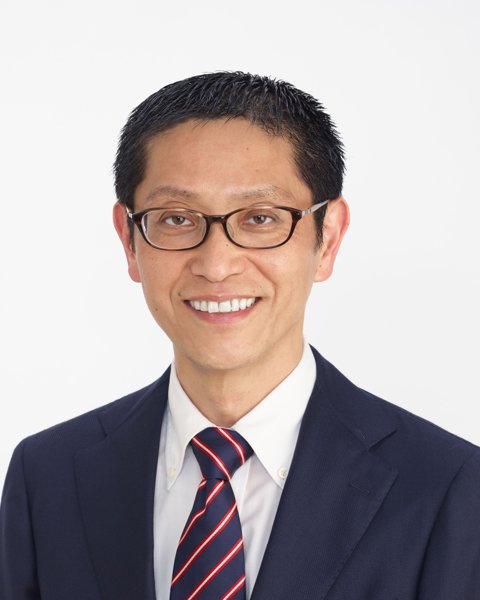
Katsuya Tanaka
- Professor, Faculty of Economics, Shiga University, Japan
- Visiting Researcher, National Research Institute for Earth Science and Disaster Resilience (NIED), Japan
- Visiting Professor, Center for Integrated Research and Education of Natural Hazards, Shizuoka University, Japan
- Global Senior Fellow, Portland State University, USA
- Global Fellow, Ewha Womans University, Korea
Environmental economics · Climate and disaster risk · Disaster risk communication · Behavioral decision-making · Spatial data science
Katsuya Tanaka is an environmental economist who studies how people perceive and respond to climate and disaster risks. His work uses stated-preference methods (choice experiments, factorial survey experiments, best–worst scaling) and spatial data analysis to inform risk communication, climate adaptation, and urban policy. He holds a Ph.D. in Agricultural and Resource Economics from Oregon State University and has collaborated with researchers and city governments in the United States, Korea, and China.
Research
What would need to change for adaptation to climate risk to move forward?
Technology and budgets are not the only things that can change. How disaster information is communicated, how heat and disaster measures are prioritized and their costs shared, how cities make use of natural systems, how streets and sidewalks are designed. We examine how people’s choices and public agreement respond when these conditions change, and how local risk changes in turn, through resident surveys and experiments and spatial data analysis.
The Tanaka Laboratory studies how individuals and communities perceive, communicate, and respond to climate and disaster risks. Grounded in environmental economics, we combine survey research, choice experiments, factorial survey experiments, spatial data analysis, and machine learning to evaluate behavioral responses, public preferences, and policy outcomes.
Disaster risk communication & evacuation
Clarity and credibility of disaster information, trust in warnings, false-alarm effects, information fatigue, and evacuation decisions.
Climate adaptation & urban resilience
Preparedness for floods, earthquakes, and extreme heat, and pathways toward sustainable, resilient communities.
Green infrastructure & environmental policy
Benefits such as risk reduction, heat mitigation, and ecosystem conservation, and policies acceptable to citizens and organizations.
Sustainable mobility & urban space
Walking, cycling, public transport, traffic calming, and street redesign for healthier and more sustainable cities.
Much of this work is carried out with partners outside academia: the Japan Meteorological Agency, NIED, the City of Portland and Portland State University, and local governments in Yokohama, Sapporo, and Koshigaya. The lab currently includes doctoral and master's students, undergraduates, and visiting researchers, most of whom design and run their own surveys. We welcome students interested in applying empirical methods to environmental and societal challenges; supervision is available in English.
Biography
Education
- Ph.D., Agricultural and Resource Economics, Oregon State University, USA (1998–2004)
- M.A., Economics, Asia University, Japan (1995–1997)
- Exchange student, Western Washington University, USA (1992)
- B.A., International Relations, Asia University, Japan (1991–1995)
Academic appointments
- 2019–present: Professor, Faculty of Economics, Shiga University (jointly appointed to the Faculty of Data Science and the Graduate School)
- 2016–2019: Professor, Research Center for Sustainability and Environment, Shiga University
- 2008–2016: Associate Professor, Research Center for Sustainability and Environment, Shiga University
- 2004–2008: Assistant Professor (COE Researcher 2004), Graduate School for International Development and Cooperation, Hiroshima University
Visiting positions
- Visiting Researcher, Policy Research Institute, Ministry of Agriculture, Forestry and Fisheries, Japan (2020–2023)
- Visiting Researcher, Economic and Social Research Institute, Cabinet Office, Japan (2014–2016)
- Visiting Scholar, Michigan State University (VISTAS program) and National Institute for Mathematical and Biological Synthesis (NIMBioS), USA (2014)
- Research Fellow, Research Institute for Humanity and Nature, Kyoto (2011–2014)
- Visiting Researcher, Graduate School of Asia-Pacific Studies, Waseda University (2009–2014)
- Visiting Scholar, LBJ School of Public Affairs, University of Texas at Austin, USA (2005–2010)
Service
- Auditor, Asian Association of Environmental and Resource Economics (AAERE, Inc.); formerly Board Member and Secretary General, AAERE (2014–2024)
- Member, Shiga Prefecture Environmental Council; Chair, Shiga Prefecture Council on Environmentally Friendly Agriculture; Member, Shiga Prefecture Council for a Net-Zero CO2 Society; Member, Shiga Prefecture Public Works Evaluation Committee
- Member, Hikone City Urban Planning Council
- Academic Committee Member, Mother Lake Goals (MLGs) Academic Forum, Shiga
- Lecturer, JICA training programs on cost–benefit analysis and economic valuation of environmental policy (2004–present)
Awards
- Research Encouragement Award, Green Infrastructure Network Japan (2025)
- Best Paper Award, 4th International Conference of the Global Academy of Business and Economic Research (2008)
- Oregon Laurels Graduate Award, Oregon State University (1999)
Working Papers
- Tanaka, K., & Nishishiba, M. (2026). Beyond Information Delivery: Communication Effectiveness, Risk Perception, and Earthquake Preparedness in Portland, Oregon. SSRN
- Kondo, N., & Tanaka, K. (2026). Strategic Bundling and Political Feasibility: A User-Segmented Valuation of Multimodal Street Redesign. SSRN
- Tanaka, K., Takada, G., Dill, J., McNeil, N., Geller, R., & Kondo, N. (2025). Green Streets, Stronger Bonds: Causal Evidence on How Sustainable Transport Infrastructure Builds Urban Resilience. SSRN
- Tanaka, K. (2025). A Unified Framework for Estimating Willingness to Pay Using Factorial Survey Experiments. SSRN
Peer-Reviewed Publications (last five years)
2027
- Tanaka, K., Dill, J., McNeil, N., Geller, R., & Kondo, N. (2027). What Are Safer Streets Worth? Bridging Resident Preferences and Policy Design in Traffic Calming. Transportation Research Part A: Policy and Practice, 215, 105293. DOI
2026
- Tanaka, K., Akaishi, K., Yokota, T., & Kusano, F. (2026). Crossing the Behavioral Threshold: Social Amplification and Climate Risk Management in Urban Flood Evacuation. Climate Risk Management, 54, 100901. DOI
- Tanaka, K., & Akaishi, K. (2026). Survival First: How Citizens Prioritize Competing Climate-Health Risk Countermeasures Under Fiscal Constraints. Risk Analysis, 46(8), e70315. DOI
- Tanaka, K., Kito, T., & Tanaka, K. (2026). When Flood Warnings Fail: Psychological Predictors of Information Clarity and Evacuation Intention. International Journal of Disaster Risk Reduction, 137, 106075. DOI
- Du, S., Tanaka, K., Sasaki, H., Horie, T., & Horie, S. (2026). Promoting Methane Reductions Through Behavioural Nudges and Informational Boosts: A Field Choice Experiment in Japanese Rice Farming. Journal of Agricultural Economics, 77(2), 677–698. DOI
- Han, J., Kim, Y., & Tanaka, K. (2026). The Role of Green Infrastructure in Enhancing Flood Resilience: A Spatial Perspective. Environmental Management, 76, 169. DOI
- Wang, N., Liu, H., Qi, G., Hua, W., Tanaka, K., Li, X., Zhang, Y., Wang, Y., Lu, H., & Luo, L. (2026). How to Motivate Green Action Among Small Farmers: Evidence From China. Sustainability, 18(3), 1669. DOI
- Tanaka, K., Kito, T., & Tanaka, K. (2026). Who Pays for Preparedness? Valuing Disaster App Features Through a Factorial Survey Experiment in Flood-Prone Communities. International Journal of Disaster Risk Reduction, 133, 105933. DOI
2025
- Tanaka, K., Akaishi, K., & Yokota, T. (2025). Public Preferences for Flood Warning Improvements: An Inferred Valuation Approach Addressing Social Desirability Bias. International Journal of Disaster Risk Reduction, 126, 105571. DOI
- Du, S., Tanaka, K., & Yagi, H. (2025). Farmers’ Adoption of Water Management Practice for Methane Reduction in Rice Paddies: A Spatial Analysis in Shiga, Japan. Sustainability, 17(8), 3468. DOI
2024
- Kohon, J., Tanaka, K., Himes, D., Toda, E., Carder, P., & Carlson, B. (2024). Extreme Heat Vulnerability Among Older Adults: A Multi-Level Risk Index for Portland, Oregon. The Gerontologist, 64(3), gnad074. DOI
- Carlson, B., Kohon, J. N., Carder, P. C., Himes, D., Toda, E., & Tanaka, K. (2024). Climate Change Policies and Older Adults: An Analysis of States’ Climate Adaptation Plans. The Gerontologist, 64(3), gnad077. DOI
- Lu, C., Tanaka, K., & Shen, Q. (2024). Residents’ Preferences on Green Infrastructure in Wuhan, China. Sustainability, 16(23), 10303. DOI
- Du, S., & Tanaka, K. (2024). Residents’ Preferences for Urban Agriculture in Shanghai. Heliyon, 10(10), e30974. DOI
- Yagi, H., Tanaka, K., Fujii, Y., & Inoue, N. (2024). Stakeholder Management and Organizational Form of Arable Farms: A Comparison of Paddy Farm Corporations in Japan. International Food and Agribusiness Management Review, 27(4), 671–688. DOI
2023
- Kim, Y., Tanaka, K., & Perrings, C. (2023). The Impact of International Conservation Agreements on Protected Areas: Empirical Findings From the Convention on Biological Diversity Using Causal Inference. Environmental Management, 72(1), 203–218. DOI
2022
- Tanaka, K., Nelson, H., McCullar, N., & Parulekar, N. (2022). Citizens’ Preferences on Green Infrastructure Practices and Their Enhancement in Portland, Oregon. Journal of Environmental Management, 318, 115415. DOI
- Wu, Z., Hua, W., Luo, L., & Tanaka, K. (2022). Technical Efficiency of Maize Production and Its Influencing Factors in the World’s Largest Groundwater Drop Funnel Area, China. Agriculture, 12(5), 649. DOI
- Tanaka, K., Hanley, N., & Kuhfuss, L. (2022). Farmers’ Preferences Toward an Outcome-Based Payment for Ecosystem Service Scheme in Japan. Journal of Agricultural Economics, 73(3), 720–738. DOI
- Qin, Z., Tanaka, K., & Matsuoka, S. (2022). Regional Disparities in Bonding and Bridging Social Capital: An Empirical Study of Rural and Urban Japan. International Journal of Japanese Sociology, 31(1), 110–126. DOI
- Ismono, H., Arifin, B., Tanaka, K., & Kada, R. (2022). Impacts of Coffee Agroforestry and Sustainability Certification on Farmers’ Livelihood in Sumatra-Indonesia. Sustainability Science and Resources, 2, 77–95. DOI
For earlier work, see Google Scholar. A complete list including Japanese-language papers is on the Japanese publications page.
Software
FactorialSurvey (R package)
Tools for designing and analyzing factorial survey experiments, including willingness-to-pay estimation. Learn more →
Contact
Katsuya Tanaka
Faculty of Economics, Shiga University
1-1-1 Bamba, Hikone, Shiga 522-8522, Japan
Email: tanakak [at] biwako.shiga-u.ac.jp